Our Take
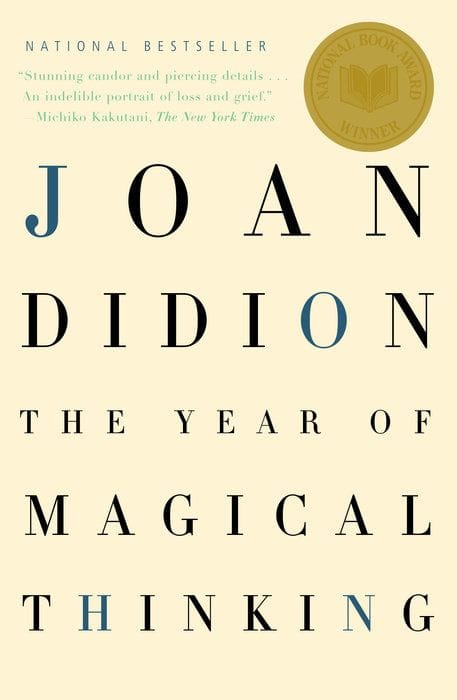
There are books about grief and then there is The Year of Magical Thinking — a work that occupies a category of its own. Joan Didion was already among the most celebrated writers in America when her husband died; what makes this book extraordinary is the way she turns her legendary analytical precision onto an experience that defeats analysis. The result is a portrait of a mind trying to think its way through something that cannot be thought through. Didion's style here is stripped of the political and cultural observations that characterize much of her earlier work. The prose is tighter, more circular, more obsessive — mimicking the way grief itself moves, returning to the same moments and images as if repetition might yield different results. She quotes from medical literature, from poetry, from her own journals, weaving them into something that is neither purely personal nor purely intellectual but urgently, uncomfortably both. The book won the National Book Award in 2005 and has since become a touchstone — the text people reach for when they lose someone, or when they try to understand what losing someone does to a person. It has been adapted for the stage by Vanessa Redgrave, and its cultural footprint continues to grow. Readers who found solace in C.S. Lewis's A Grief Observed or were moved by Paul Kalanithi's When Breath Becomes Air will recognize the territory, though Didion's voice is utterly her own. Essential — and one of the rare books that earns that word without qualification.