🚨 Spoilers ahead. That's the whole point. If you wanted to be surprised, you should have read the book.
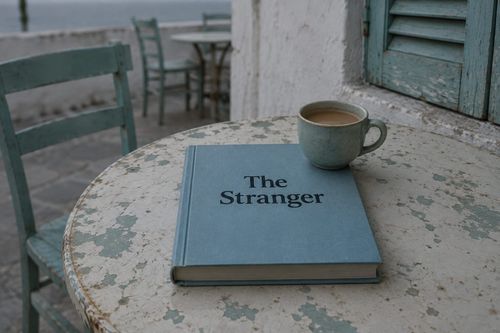
Josef K., a senior bank officer, is arrested one morning on his thirtieth birthday. Nobody tells him the charge. He is allowed to go to work, so he does. He visits a hostile court in a tenement attic, hires a lawyer named Huld, and consults a painter named Titorelli. Nothing helps. A priest in a cathedral tells him the parable of the doorkeeper and the Law. On the eve of his thirty-first birthday, two men walk K. to a quarry and stab him in the heart. His last thought is that the shame will outlive him. The paperwork never ends.
- Kafka told his friend to burn it. Kafka asked Max Brod to destroy his unpublished manuscripts. Brod ignored him and published The Trial in 1925, a year after Kafka died, which is the only reason anyone can quote it.
- The book is technically unfinished. Kafka wrote it in 1914 and 1915 and never completed it. The chapter order readers get was set by Brod, so even the sequence is an editor's call.
- Kafka laughed while reading it aloud. Brod recalled that Kafka read the first chapter to friends and kept breaking into laughter. The book is bleak, but its author saw the joke.
- “K. finds out what he did eventually.” Case unknown. K. never learns the charge. Not from the court, not from the lawyer, not from the priest. The book ends with the accusation still blank.
- “K. gets shot at the end.” Wrong weapon. Two men in frock coats take K. to a quarry and stab him in the heart with a knife. No gun, no hanging, no dramatic speech.
- “A judge sentences K. in open court.” Gavel never falls. K. attends one hearing, in an attic, and no judge ever announces a ruling before the two men show up to carry out the sentence.
- If they say: “How much time passes between K.'s arrest and his execution?”
You say: “A year, minus one day. He is arrested on his thirtieth birthday and executed on the eve of his thirty-first. The book never names the crime, but it keeps a very precise calendar.” - If they say: “It's just a story about annoying bureaucracy.”
You say: “I say the doorkeeper parable says otherwise. A man waits his whole life at a door to the Law, then learns it was meant only for him, and it gets shut.”
🍸 Your Bar Line
Josef K. is arrested at thirty, never learns why, and is stabbed in a quarry a day before thirty-one. Kafka wanted the book burned. His friend Brod refused.