🚨 Spoilers ahead. That's the whole point. If you wanted to be surprised, you should have read the book.
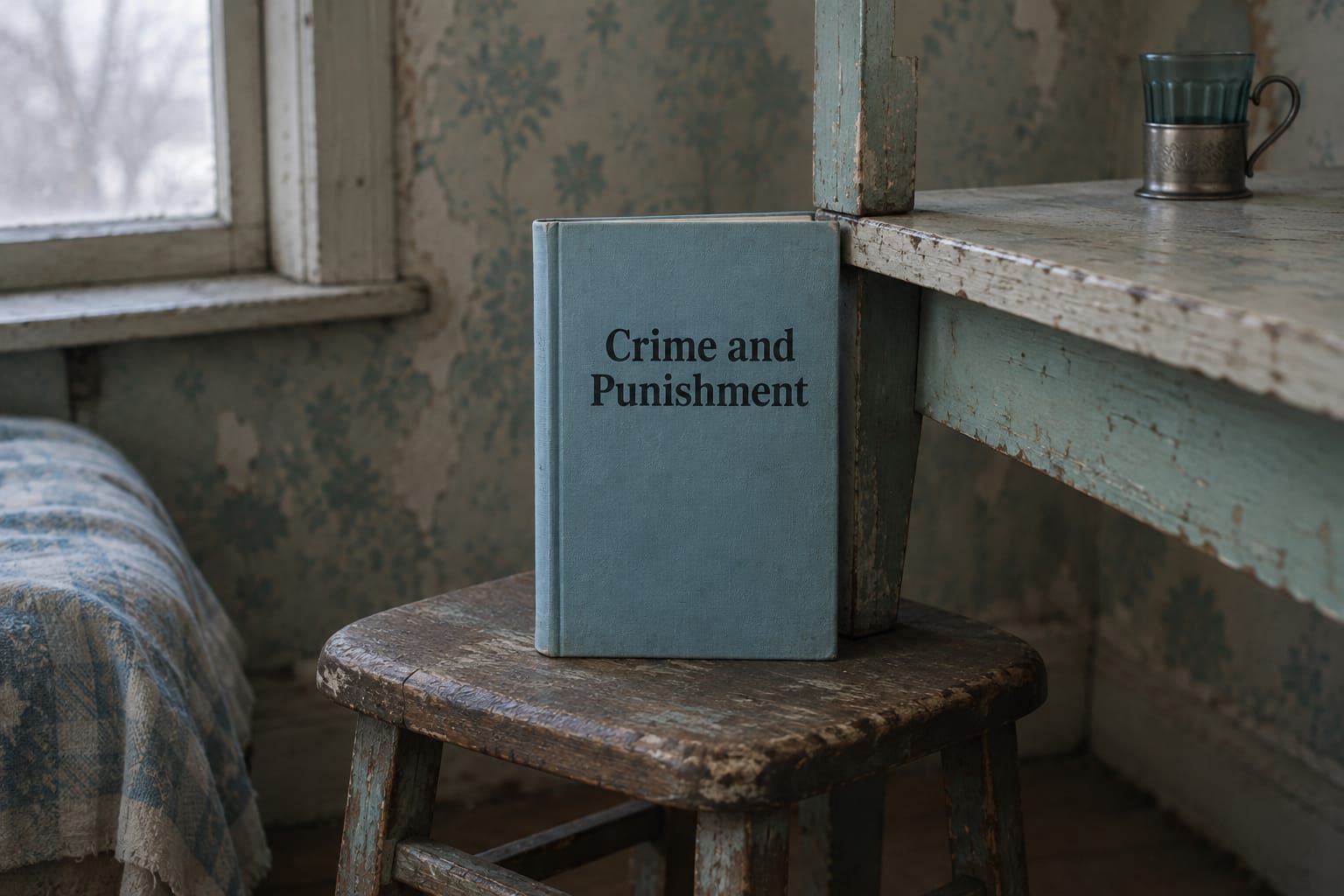
Rodion Raskolnikov, a broke former student in St. Petersburg, murders an old pawnbroker, Alyona Ivanovna, believing extraordinary men may break the law. Her half-sister Lizaveta walks in, so he kills her too. Fever and paranoia follow. The investigator Porfiry Petrovich circles him. Sonya Marmeladova, forced into prostitution to feed her family, urges him to confess. He does, and gets eight years in Siberia. Sonya follows. In the epilogue, he starts to change. The theory is dead. The guilt did the work.
- Dostoevsky finished another novel in 26 days. The Gambler, dictated to stenographer Anna Snitkina in 1866 to meet a publisher's deadline, was written while Crime and Punishment was being serialized. Dostoevsky later married Snitkina.
- The hero's name means split. Raskolnikov comes from raskol, the Russian word for schism or split. Dostoevsky named a man divided against himself, and the book spends six parts and an epilogue pulling him further apart.
- It first ran in a magazine. Crime and Punishment appeared in monthly installments in the journal The Russian Messenger across 1866. The doorstop on your shelf started life as a serial.
- “Raskolnikov gets away with the murder.” Escaped? Hardly. He confesses, partly at Sonya's urging, and is sentenced to eight years of hard labor in Siberia. Nobody catches him with evidence alone. He walks into the police station himself.
- “He only kills the pawnbroker.” One victim? Count again. Lizaveta, the pawnbroker's half-sister, walks in during the murder and he kills her too. She was never part of his plan, which makes it worse.
- “Sonya turns him in to the police.” Wrong informant. Sonya urges him to confess, but he does it himself by walking into the police station. She never reports him, and she follows him to Siberia.
- If they say: “What does Raskolnikov do with the stolen goods?”
You say: “He hides the purse and the items under a stone in a courtyard and never counts or spends any of it. The robbery was never the point.” - If they say: “Isn't it basically a whodunit?”
You say: “I'd call it a whydunit. We watch him do it in Part One, and then Porfiry Petrovich closes in with psychology and patience, not evidence.”
🍸 Your Bar Line
A broke student kills a pawnbroker and her half-sister, hides the loot under a stone, and spends the rest of the book losing an argument with his own conscience before Siberia.