🚨 Spoilers ahead. That's the whole point. If you wanted to be surprised, you should have read the book.
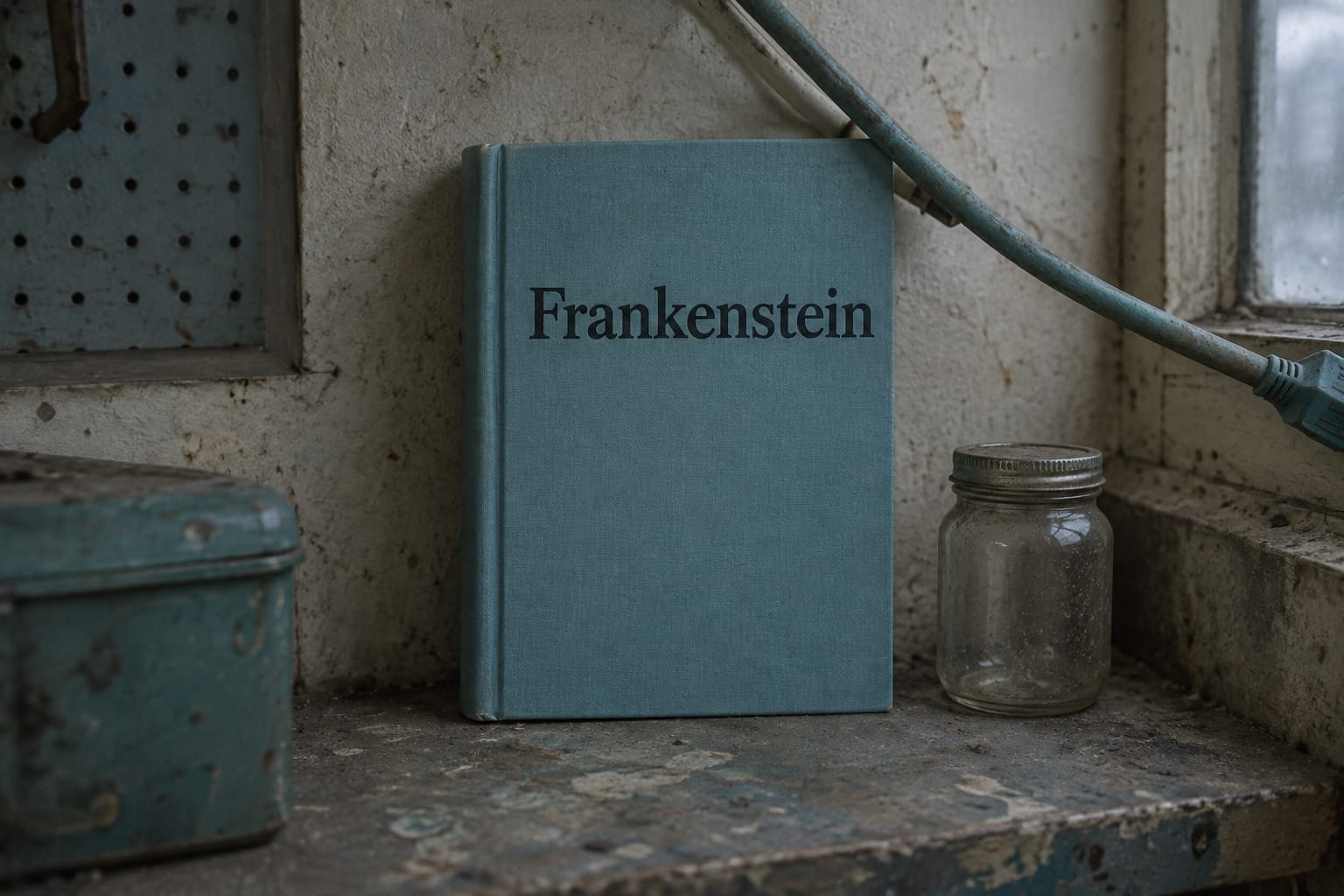
Captain Robert Walton, sailing toward the North Pole, writes to his sister about a man he rescues from the ice: Victor Frankenstein. Victor, a student, assembles a creature and brings it to life, then flees in disgust. The abandoned creature, intelligent and lonely, murders Victor's little brother William, and Justine is hanged for it. The creature demands a female companion. Victor builds one, then destroys her. Revenge follows: Henry Clerval and Victor's bride Elizabeth die. Victor chases the creature north and dies aboard Walton's ship. The creature mourns him, vows to burn himself, and vanishes into the dark.
- The first edition credited nobody. Frankenstein appeared anonymously in 1818, with a preface by Percy Bysshe Shelley, so some reviewers guessed he wrote it. Mary Shelley's name first appeared on the 1823 second edition.
- It started as a ghost story contest. In 1816 at Villa Diodati near Lake Geneva, Lord Byron proposed that the guests each write a ghost story. Mary Godwin, then eighteen, began what became Frankenstein.
- The creature reads Paradise Lost. He finds a copy in a portmanteau, along with Plutarch's Lives and The Sorrows of Werter, and teaches himself from them. Then he compares his own position to Adam's.
- “Frankenstein is the name of the monster.” Wrong guy. Frankenstein is Victor, the creator. The creature never gets a name at all, which is the sad point: the one person who could name him ran away.
- “Igor helped him build it.” Igor never applied. There is no assistant in the novel. Victor works alone and in secret at Ingolstadt, and he tells nobody what he is making until it is far too late.
- “Lightning brought it to life.” Just drizzle, actually. The creation happens on a dreary November night with rain on the windows. Victor talks about instruments of life and a spark of being, not a lightning bolt.
- If they say: “Isn't Frankenstein just a monster story?”
You say: “Not even close. It has three narrators nested like dolls: Walton's letters hold Victor's account, and inside that the creature tells his own side at length.” - If they say: “The creature just grunts and kills.”
You say: “In the book he's fluent. He learns language by watching the De Lacey family, then demands a female companion from Victor, who destroys her before she is finished.”
🍸 Your Bar Line
Frankenstein is the scientist, not the monster. Victor makes a creature, abandons it, loses nearly everyone he loves, and dies on an Arctic ship while the creature vows to burn himself.