🚨 Spoilers ahead. That's the whole point. If you wanted to be surprised, you should have read the book.
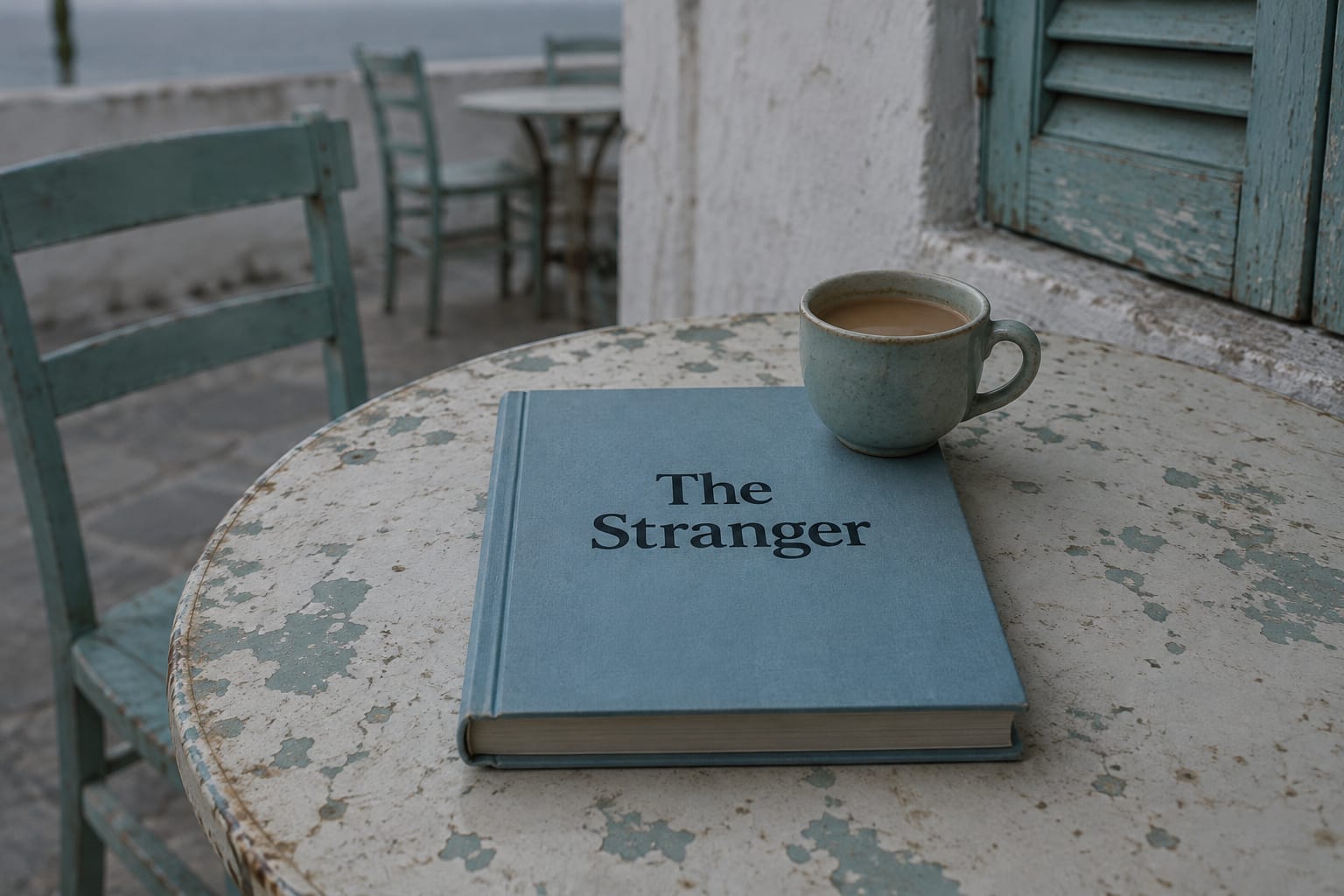
Meursault, a clerk in French Algiers, gets word that his mother has died at her care home. He attends the vigil and funeral without crying. Soon after, he starts a relationship with Marie and gets tangled up with his neighbor Raymond, who is feuding with an Arab man. On a blazing beach, Meursault shoots that man, firing once and then four more times. At trial, the prosecutor leans hard on his flat behavior at the funeral. The jury sentences him to the guillotine. In his cell he rages at the chaplain, then accepts the world's indifference.
- One French novel carries two English titles. The French original, L'Étranger, became The Stranger in Stuart Gilbert's 1946 translation. Later British editions, including Sandra Smith's for Penguin, call it The Outsider.
- It first appeared under occupation. Gallimard published L'Étranger in Paris in 1942, while Germany occupied France. Camus, born in French Algeria, set it in Algiers, far from the war.
- A famous philosopher reviewed it fast. Jean-Paul Sartre published 'Explication de L'Étranger' in Cahiers du Sud in 1943, a long essay on the novel written within a year of its release.
- “Meursault murders his own mother.” Hard no. She dies at a care home in Marengo, and nobody in the book kills her. The man he shoots is a different person entirely, and the funeral is just evidence the prosecutor uses.
- “The book ends with his execution.” Not on the page. The final scene is Meursault in his cell, after the chaplain's visit, hoping a crowd of spectators will meet him with cries of hatred. The guillotine never drops.
- “He planned the shooting in advance.” Nothing says that. Meursault pockets Raymond's revolver earlier to head off trouble, then walks back to the beach alone. He fires with the sun in his eyes, and the novel gives no plan.
- If they say: “It's just a book about a guy who feels nothing.”
You say: “He clearly enjoys swimming with Marie and the sun on the beach. What he won't do is perform grief, and the court punishes him for it.” - If they say: “Why did the trial focus on the funeral?”
You say: “I'd say the prosecutor builds the case on the vigil, where Meursault drank coffee and smoked beside the coffin. The jury hears a character, not just a shooting.”
🍸 Your Bar Line
A clerk shoots a man on an Algiers beach, is condemned mostly for not crying at his mother's funeral, and finds peace in a cell hoping for a hateful crowd.