Our Take
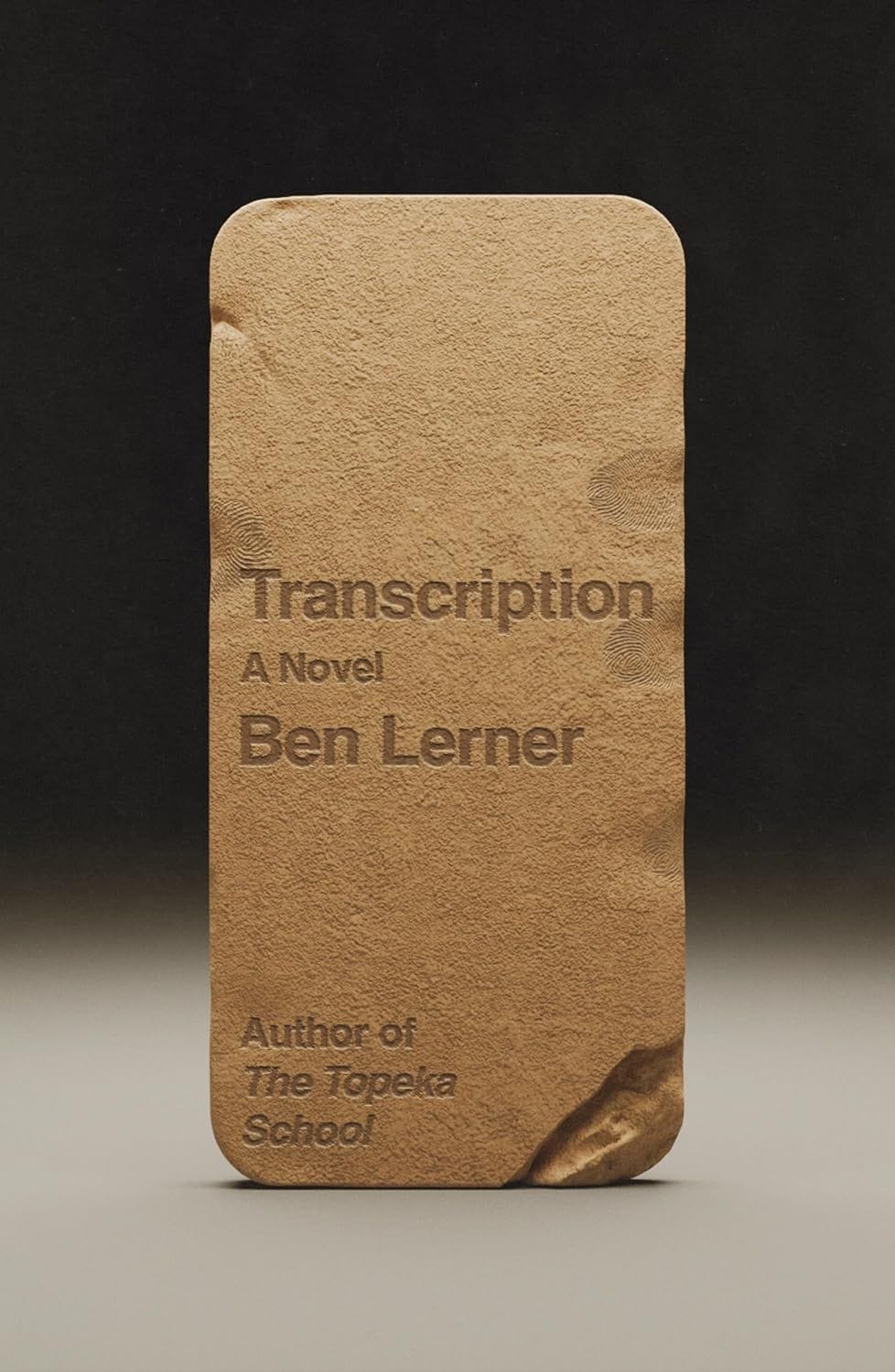
At 144 pages, Transcription is the kind of novel that takes up far more space in your head than it occupies on your shelf. Ben Lerner — long celebrated as one of the sharpest literary minds working in American fiction — strips everything back here: no sprawling plot, no conventional narrative arc, just a single charged situation unfolding with the precision and unease of a Kafka parable. The central conceit is almost absurdly simple: a man forgets his phone, can't record the conversation he came to capture, and can't bring himself to say so. From that premise, Lerner builds something genuinely unsettling about memory, obligation, and the strange crutches we've handed over to our devices. The novel's Kafkaesque influences — particularly echoes of "The Judgement" and "A Hunger Artist" — surface not as homage but as structural logic: the anxiety here is real, not literary. If you've read Lerner's 10:04 or Leaving the Atocha Station, you know what to expect from his voice: lyrical, self-aware, intellectually alive. Transcription may be his most compressed work yet, but compression suits him. Readers who gravitate toward the quiet intensity of Rachel Cusk's Outline or Jenny Offill's Dept. of Speculation will find a lot to love here.