Our Take
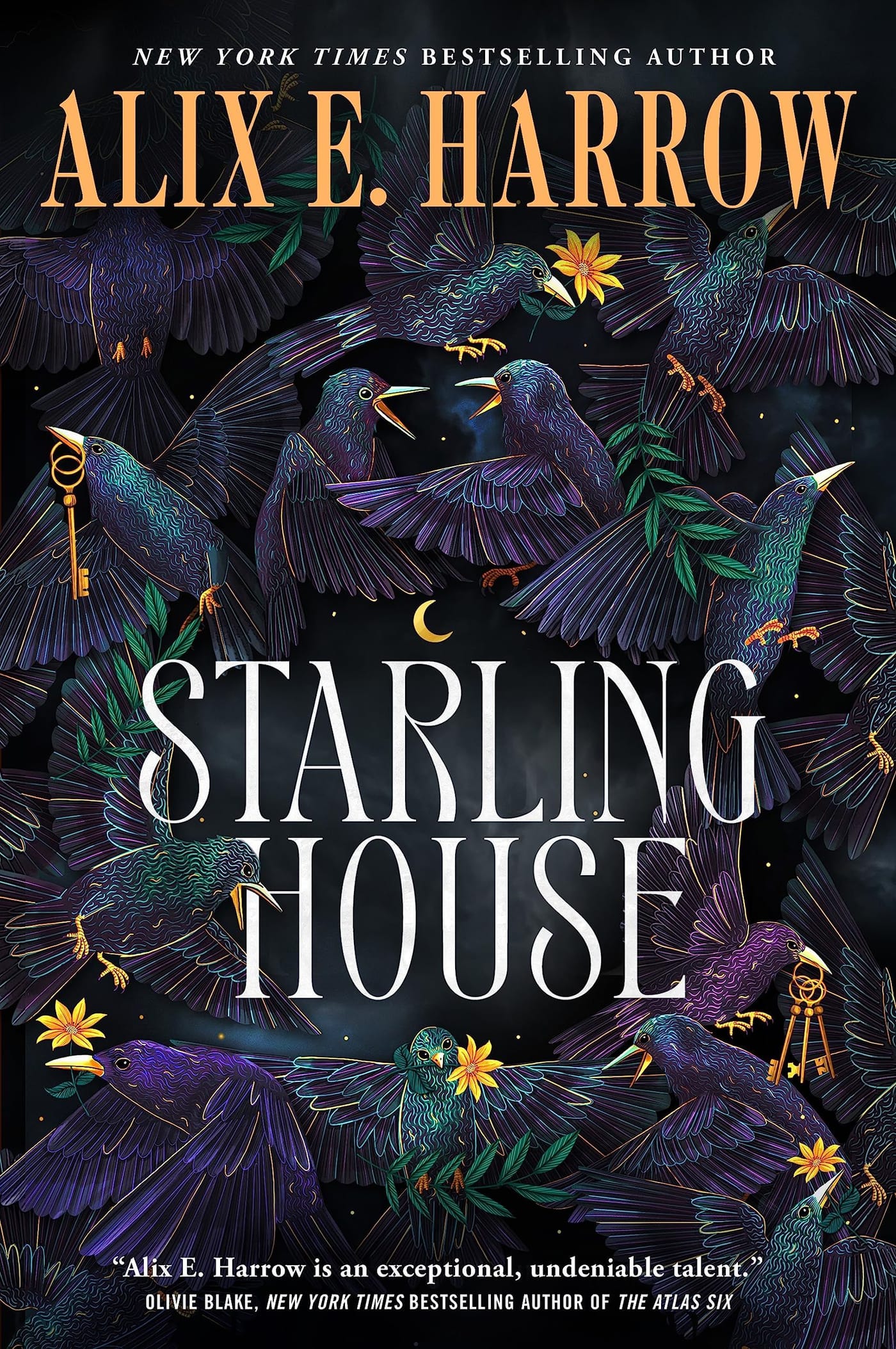
Harrow has a gift for prose that reads as both literary and propulsive—sentences that slow you down in the best way, wrapped around a story that won't let you stop. Starling House uses its gothic architecture deliberately: the crumbling mansion, the generational curse, the brooding heir are all familiar furniture, but Harrow arranges them around a thematic core about class, home, and what people will do to protect the people they love that gives the whole thing unexpected weight.
Opal is a heroine in the tradition of Gothic fiction's most stubborn women—pragmatic to a fault, prickly by necessity, and quietly ferocious about the things that matter to her. Her relationship with Arthur develops with the slow burn appropriate to the setting. And the house itself earns its place as a character, rendered with the specificity of something that breathes.
If you loved The Ten Thousand Doors of January by Harrow herself or Mexican Gothic by Silvia Moreno-Garcia, Starling House belongs on your shelf. Polygon called it "sumptuous and romantic as it is sinister"—that's exactly right.