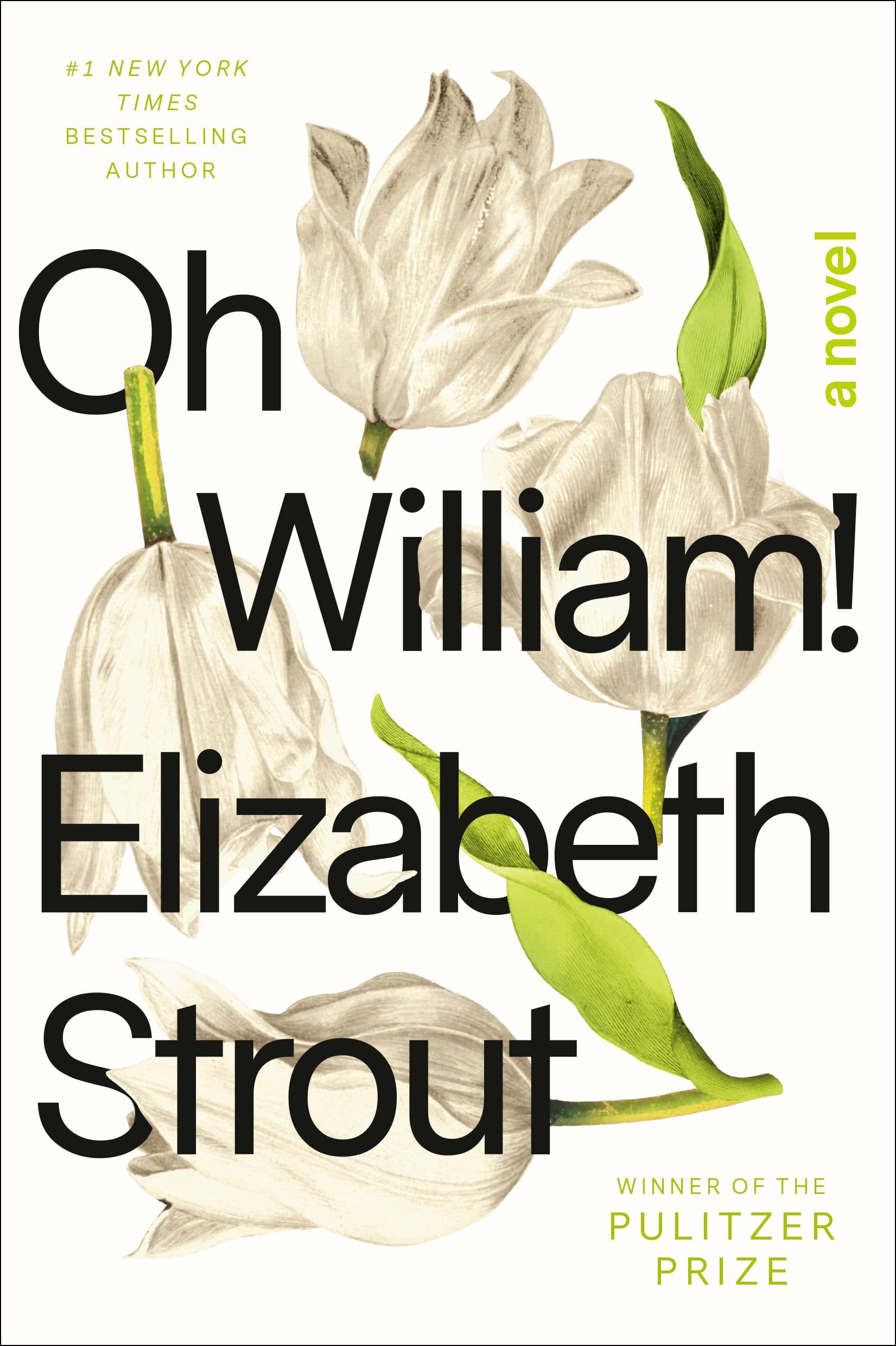
Oh William!
by Elizabeth Strout
Contemporary
Literary Fiction
Family Drama
241 Pages
"I read Oh William! in one sitting and spent the next day thinking about it. Strout does something almost impossible — she makes the ordinary feel like it contains everything. Lucy Barton is one of the great characters in contemporary fiction."
Synopsis
Oh William! returns to Lucy Barton, the writer at the heart of Elizabeth Strout's beloved novel My Name Is Lucy Barton, and to the man she has never quite been able to leave behind — her first husband, William. They divorced years ago. They have both remarried. And yet they remain connected in a way Lucy cannot fully explain, even to herself.
When William asks Lucy to accompany him on a journey to investigate a newly uncovered family secret — the kind that quietly rearranges everything you thought you knew about the people closest to you — she agrees. What follows is a novel of surprising tenderness and precision: two people who built a life together and then unmade it, traveling side by side through the residue of what they were to each other and the accumulated mysteries that neither ever quite solved.
Written in Strout's signature spare, luminous prose, Oh William! is a meditation on marriage, memory, and the quiet forces that hold us to one another even across distance and time — and on the particular kind of knowing, and not-knowing, that comes with loving someone for a very long time.
Our Take
Strout has developed, across her career, one of the most distinctive voices in American fiction — and in Oh William! that voice is at its most refined. Lucy Barton narrates with a quality that is hard to name precisely: digressive and self-interrupting on the surface, but underneath working with extraordinary precision toward moments of insight that arrive quietly and land hard. It is the prose of someone who has learned, through long practice, how much can be left unsaid.
The novel is slight in the best sense — it does not overstay its welcome or reach for more than it needs. William himself is rendered with remarkable generosity given that he is, by most measures, a difficult man: unfaithful, emotionally limited, and bewildering to those around him. But Strout and Lucy refuse to reduce him, and the refusal is the point. The book is, at bottom, about the impossibility of fully knowing another person — and about the strange grace of staying curious about them anyway.
Readers who have followed Lucy Barton from My Name Is Lucy Barton will find this a deeply satisfying return, but the novel works entirely on its own. Fans of Penelope Fitzgerald's quiet, devastating late work, or of Anne Tyler's Breathing Lessons for its portrait of a long marriage's accumulated texture, will find much to cherish here. Essential Strout.